How To Relax Your Brain Before Sleep? 10 Proven Ways
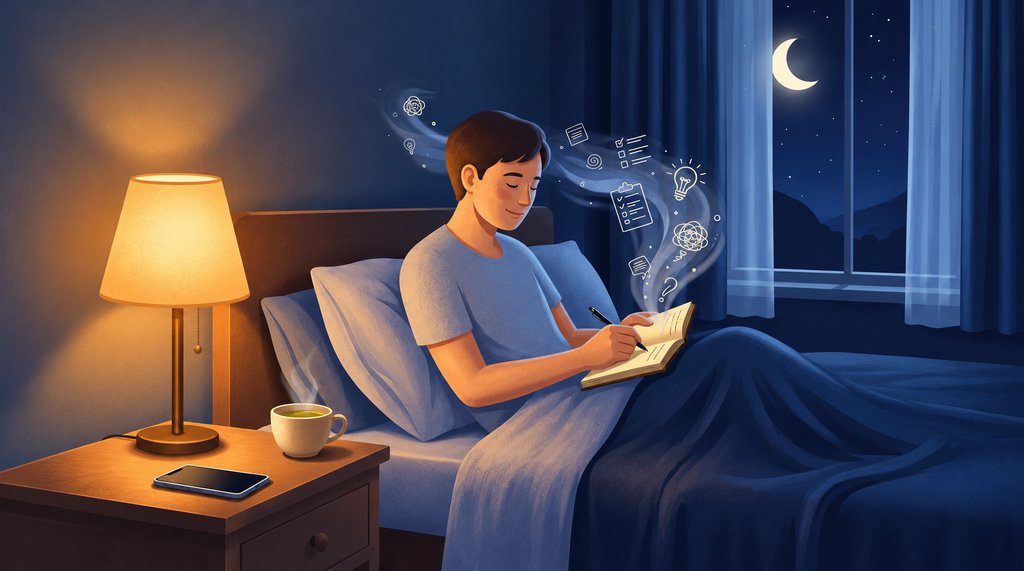
You can relax your brain before sleep by getting your worries out of your head and onto paper, winding down for an hour before bed, using breathing or muscle-relaxation exercises, and getting out of bed if you can’t drift off.
These aren’t just nice ideas. In a Baylor University sleep-lab study, people who spent five minutes writing a specific to-do list before bed fell asleep about nine minutes faster than those who wrote about tasks they’d already finished.
That’s a big deal for a common problem. In 2024, 30.5% of U.S. adults slept less than the recommended 7 hours, according to the CDC, and 15.4% had trouble falling asleep.
If you’ve ever thought, “I want to sleep but my brain won’t stop talking to itself,” this article explains why your mind races at night and gives you practical, research-backed ways to calm anxiety at night, clear your mind, and sleep better.
Why Does My Mind Race When I Try To Sleep?
Racing thoughts at night are incredibly common, and there are a few reasons they show up the moment your head hits the pillow.
There’s finally nothing to distract you. During the day, work, screens, and conversations keep your mind busy.
At night, in a dark, quiet room, unfinished business floods in. Sleep researcher Michael Scullin put it simply: the main problem with falling asleep is that we get into bed and our mind doesn’t turn off.
Unfinished tasks keep nagging. Scullin also notes that our growing to-do lists can cause us to worry about unfinished tasks at bedtime. Your brain keeps rehearsing them so you won’t forget.
Stress and anxiety keep your body on alert. When you’re stressed, your body stays in a more alert state, which makes it hard to switch into sleep mode.
Since your pineal gland releases melatonin to help you sleep, you might also be wondering, how do I know if my pineal gland is damaged? Our article covers the key signs.
Trying hard to sleep backfires. The harder you try to force sleep, the more frustrated and awake you become.
Many sleep programs teach people to stop “trying” and instead create the conditions for sleep.
Your bed becomes linked with worry. If you spend many nights lying awake and anxious, your brain can start associating your bed with stress rather than rest.
| Cause Of Racing Thoughts | What It Feels Like |
|---|---|
| Unfinished tasks | Mentally rehearsing tomorrow’s to-do list |
| Stress or anxiety | Heart racing, “what if” thinking |
| Overthinking the day | Replaying conversations or mistakes |
| Pressure to sleep | Clock-watching and calculating hours left |
| Screen use before bed | Feeling wired instead of tired |
| Irregular schedule | Not feeling sleepy at bedtime |
How Do You Clear Your Mind To Sleep?
The goal isn’t to empty your mind completely, which is nearly impossible. It’s to give your thoughts somewhere else to go so they stop circling.
Write A To-Do List Before Bed
This is one of the simplest tricks with real research behind it. In the Baylor study, 57 young adults spent five minutes before bed writing either a to-do list or a list of completed tasks.
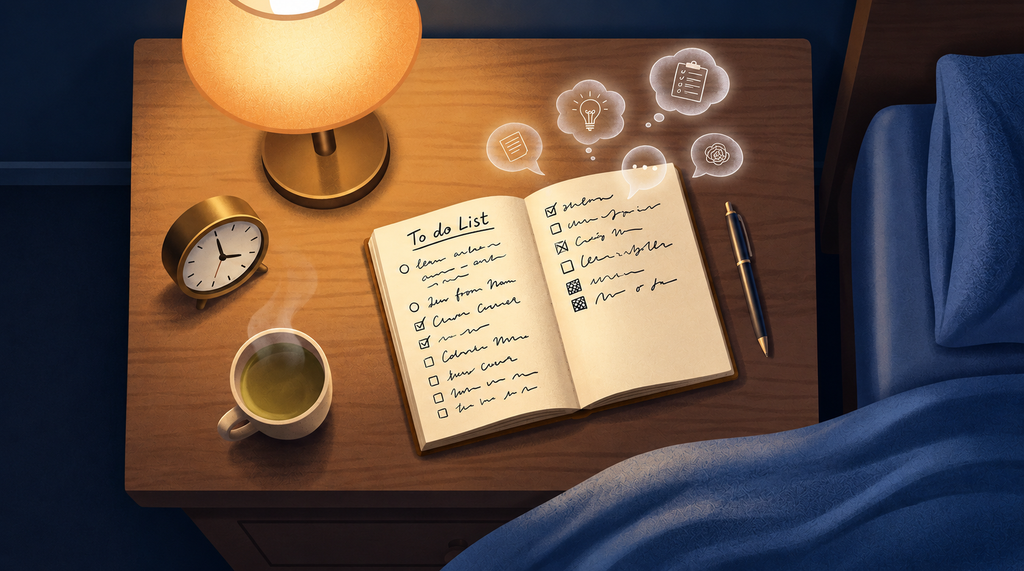
The to-do list group fell asleep in about 16 minutes on average, compared with 25 minutes for the other group.
Even better, the more specific the list, the faster people fell asleep. Those with the most detailed lists fell asleep roughly 15 minutes faster.
Scullin noted that a nine-minute improvement is comparable to what some sleep medication studies show.
How to do it:
- Set a timer for five minutes.
- Write everything you need to do tomorrow and over the next few days.
- Be specific. “Email Priya about the report at 10 a.m.” works better than “work stuff.”
- Put the list away and go to bed.
A caveat: the study was small and included healthy young adults without sleep problems. The researchers said larger studies are needed. But at five minutes and no cost, it’s easy to try.
Try A “Worry Time” Earlier In The Evening
Some NHS sleep guides suggest making time to list what’s on your mind as a way of getting things out of your head.
You don’t need to solve everything. Seeing problems written down can give you a fresh perspective.
How to do it: an hour or two before bed, spend 10 to 15 minutes writing down worries and one small next step for each. When worries pop up later, remind yourself you’ve already dealt with them for today.
Keep A Notepad By Your Bed
If a thought wakes you up or keeps you awake, jot it down in a few words. This tells your brain it’s safe to let go until morning.
How Do You Quiet Your Mind To Sleep With Mental Exercises?
Mental exercises for sleep give your busy brain something calm and neutral to focus on.
Cognitive behavioral therapy for insomnia (CBT-I), the leading treatment for sleep problems, teaches relaxation methods because they can reduce physical tension, quiet your mind, and help you ease into sleep.
Slow Breathing: Slow, deep breathing helps shift your body out of “alert” mode.
Simple version:
- Breathe in gently through your nose for a count of 4.
- Pause briefly.
- Breathe out slowly through your mouth for a count of 6.
- Repeat for 5 to 10 minutes.
The key is making your out-breath longer than your in-breath.
Progressive Muscle Relaxation: This sleep exercise involves tensing and relaxing muscle groups one at a time, from your toes to your head.
- Tense your toes for 5 seconds, then release and notice the difference.
- Move to your calves, thighs, stomach, hands, arms, shoulders, and face.
- Breathe slowly throughout.
Many people find their body feels heavy and loose by the end.
Body Scan: Lie still and slowly move your attention from your feet to your head, noticing sensations without trying to change them. If your mind wanders, gently bring it back.
Visualization: Picture a calm, detailed scene, like a beach or a forest walk. Focus on sights, sounds, smells, and textures. The more detail, the less room for worries.
Counting Or Word Games: Boring, low-effort mental tasks can crowd out racing thoughts. Try counting backward from 300 by threes, or thinking of an animal or object for each letter of the alphabet.
| Mental Exercise | Best For | Time Needed |
|---|---|---|
| Slow breathing | Physical tension and anxiety | 5 to 10 minutes |
| Progressive muscle relaxation | Body tension | 10 to 15 minutes |
| Body scan | Restlessness | 10 to 20 minutes |
| Visualization | Busy, worried thoughts | 5 to 15 minutes |
| Counting or word games | Repetitive thoughts | As needed |
How To Calm Anxiety At Night?
Anxiety at night, also called night anxiety, often feels worse because you’re alone with your thoughts and everything seems bigger in the dark.
Here’s how to deal with anxiety at night.
Remind Yourself That A Bad Night Isn’t A Disaster: Worrying about not sleeping makes it harder to sleep. An NHS insomnia guide suggests reminding yourself that sleep problems are common and not as damaging as you might think. Taking the pressure off can help your body relax.
Challenge Catastrophic Thoughts: CBT-I therapists help people spot and challenge unhelpful thoughts. For example:
| Unhelpful Thought | More Balanced Thought |
|---|---|
| “If I don’t sleep, tomorrow will be ruined.” | “I’ve managed after poor sleep before. I’ll get through it.” |
| “I’ll never fall asleep.” | “My body will sleep when it’s ready.” |
| “I’ll get sick if I don’t sleep tonight.” | “One rough night won’t harm my health.” |
Use Grounding Techniques: When anxiety spikes, ground yourself in the present. Try naming five things you can feel (the sheets, the pillow, your feet), four things you can hear, and three slow breaths.
Step Away From The Clock: Checking the time increases pressure. The Sandwell and West Birmingham NHS sleep hygiene guide advises against checking or watching the clock during the night. Turn your clock away or put your phone out of reach.
When Night Anxiety Is Severe: If you regularly feel intense anxiety at night, panic attacks, or worry that affects your daytime life, talk to your doctor. Ongoing anxiety is treatable, and getting support can improve both your mood and your sleep.
What To Do When You Can’t Sleep At Night?
If you’ve tried relaxing and you’re still wide awake, here’s the most important rule: don’t lie there fighting it.
Get Out Of Bed
This technique, called stimulus control, is a core part of CBT-I. Advice varies slightly on timing:
| Source | When To Get Up |
|---|---|
| Lancashire & South Cumbria NHS guide | If you can’t sleep within about 15 minutes |
| UC Davis Health | If you can’t fall asleep within 20 minutes |
| Insomnia patient guide (Alosa Health) | After 20 to 30 minutes |
Don’t watch the clock to measure this. Just get up when you realize you’ve been awake for a while.
What to do when you’re up:
- Go to another room if possible.
- Do something relaxing and planned in advance, like reading a dull book or listening to calm music.
- Keep lights dim. UC Davis Health advises against exposing yourself to bright light while you’re up.
- Avoid screens, work, and anything stimulating.
- Return to bed only when you feel sleepy.
The Lancashire NHS guide suggests repeating this as many times as needed, including if you wake in the middle of the night.
Why Getting Up Works
Lying awake in bed teaches your brain that bed is a place for worrying. Getting up helps rebuild the link between your bed and sleep.
How To Destress Before Bed?
How you spend the hour before bed has a big effect on how quickly your mind settles.
Build A Wind-Down Routine
The Sandwell and West Birmingham NHS guide recommends taking time to wind down before bed. A consistent routine signals to your brain that sleep is coming.
A sample 60-minute wind-down:
| Time Before Bed | Activity |
|---|---|
| 60 minutes | Turn off work emails and news |
| 50 minutes | Write tomorrow’s to-do list |
| 40 minutes | Take a warm shower or bath |
| 30 minutes | Dim the lights and put screens away |
| 20 minutes | Read something light or listen to calm music |
| 10 minutes | Slow breathing or muscle relaxation in bed |
UC Davis Health suggests options like relaxing music, reading something soothing for 15 minutes, caffeine-free tea, or deep breathing.
Put Screens Away
Phones, tablets, and laptops keep your brain engaged with messages, news, and social media. An insomnia patient guide recommends limiting electronics before bed.
Avoid Stimulating Activities
Skip intense conversations, work tasks, or exciting shows right before bed. Save them for earlier in the evening.
What Is Good Sleep Hygiene?
Sleep hygiene means the daily habits and environment that support good sleep. NHS sleep hygiene guidance explains that building good habits and routines can improve sleep quality.
Sleep Hygiene NHS Tips
Based on NHS trust guides, key sleep hygiene tips include:
- Wake up and get out of bed at the same time every morning, including weekends.
- Go to bed when you feel sleepy, but not too early.
- Take time to wind down before bed.
- Avoid checking the clock during the night.
- Don’t rely on alcohol to help you sleep.
More Sleep Hygiene Tips
| Habit | Why It Helps |
|---|---|
| Same wake-up time daily | Sets your body clock |
| Morning sunlight | UC Davis Health suggests 15 minutes facing the sun after waking |
| Cut caffeine in the afternoon | Caffeine can keep you alert for hours |
| Limit alcohol | It may help you doze off but leads to fragmented sleep |
| Don’t go to bed too hungry or too full | Both can disrupt sleep |
| Keep naps short and early | UC Davis Health suggests under an hour, before 3 p.m. |
| Dark, quiet, cool bedroom | Blackout curtains, earplugs, or white noise can help |
| Use bed only for sleep | Strengthens the bed-sleep connection |
An honest note: the NHS guide states that sleep hygiene alone can’t cure long-term sleep problems, but it works best combined with CBT-I.
Alongside these habits, you can also learn how to naturally restore pineal gland function.
Does Exercise Help You Sleep Better?
Yes. Regular physical activity is part of many sleep guides. An insomnia patient guide lists regular physical activity among its sleep hygiene tips.
Exercise for sleep tips:
- Aim for regular activity most days, like brisk walking, cycling, or swimming.
- Get outside in daylight when you can, since it also helps set your body clock.
- If late-evening workouts leave you wired, try moving them earlier.
- Gentle stretching or yoga in the evening can help you wind down.
How To Sleep When Stressed Or Anxious?
Stressful periods make sleep harder exactly when you need it most.
Here’s how to fall asleep when stressed or anxious:
- Unload your mind early. Write your to-do list and worries before bed.
- Keep your routine. Stick to your usual wake-up time even after a bad night.
- Use relaxation exercises. Slow breathing and muscle relaxation calm your body.
- Limit news and social media at night. They often fuel worry.
- Lower the stakes. Remind yourself that one poor night is manageable.
- Get up if you can’t sleep. Do something calm in dim light.
- Talk to someone. Sharing worries during the day can reduce how much they show up at night.
- Relieve stress during the day. Exercise, time outdoors, and breaks help prevent stress from building up by bedtime.
How To Fall Asleep Fast?
There’s no magic switch, but these steps give you the best chance of falling asleep quickly:
| Step | What To Do |
|---|---|
| Go to bed only when sleepy | Avoid going to bed too early just to “try” |
| Write a specific to-do list | Five minutes before bed |
| Darken your room | Blackout curtains or an eye mask |
| Breathe slowly | Long, slow exhales |
| Relax your muscles | Progressive muscle relaxation |
| Don’t watch the clock | Turn it away |
| Get up if needed | After roughly 15 to 30 minutes awake |
How To Get More Sleep And Improve Sleep Quality?
If you’re consistently short on sleep, focus on consistency first. The CDC recommends at least 7 hours of sleep for adults.
Steps to get more sleep:
- Protect your sleep window. Set a regular bedtime that allows at least 7 hours before your wake-up time.
- Keep the same wake-up time daily. This is one of the most powerful habits for better sleep.
- Limit late caffeine and alcohol.
- Create a calm bedroom.
- Address racing thoughts using the techniques above. Some people also try a pineal support supplement, but these daily habits should always come first.
Better sleep may help in other ways too. In a 2022 trial, adults who extended their sleep by about 1.2 hours per night ate around 270 fewer calories a day.
When Should You Get Help For Sleep Problems?
Occasional bad nights are normal. But talk to your doctor if:
- You have trouble sleeping three or more nights a week for several weeks
- Poor sleep affects your mood, work, or relationships
- You snore loudly, gasp, or stop breathing during sleep
- You feel very sleepy during the day, especially while driving
- Anxiety, depression, or racing thoughts feel overwhelming
- You rely on alcohol or sleeping pills to sleep
What Is CBT-I?
Cognitive behavioral therapy for insomnia (CBT-I) is considered the most effective treatment for insomnia.
It helps you change the thoughts and habits that keep you awake. The Sandwell and West Birmingham NHS guide describes CBT-I as a proven, effective program, usually lasting about six weeks, which can be done at your own pace.
CBT-I may include temporarily limiting time in bed so your body builds a stronger sleep drive. It’s best done with guidance from a trained professional or a structured program.
What Is The Bottom Line On Relaxing Your Brain Before Sleep?
If your brain won’t stop talking to itself at night, you’re far from alone, and there are simple, proven ways to quiet it.
Start by giving your thoughts somewhere to go: a five-minute, specific to-do list before bed helped people fall asleep about nine minutes faster in a sleep-lab study.
Build a calm wind-down routine, put screens away, and use slow breathing or muscle relaxation once you’re in bed.
If you’re still wide awake, don’t fight it. Get up, do something relaxing in dim light, and return when sleepy.
Keep a consistent wake-up time, limit caffeine and alcohol, and get daylight and exercise during the day.
If racing thoughts or night anxiety keep you up most nights, talk to your doctor about CBT-I, the most effective treatment for long-term sleep problems.
Better nights usually come from small, steady changes.
What Do People Ask Most About Relaxing Your Brain Before Sleep?
How Do I Relax My Brain Before Going To Sleep?
Relaxing your brain before sleep works best with a wind-down routine, writing down your to-do list, and calming exercises like slow breathing or muscle relaxation. Put screens away and keep lights dim in the hour before bed. If you can’t sleep, get up and do something calm.
Why Does My Mind Race When I Try To Sleep?
Your mind races when you try to sleep because quiet and darkness give unfinished tasks and worries room to surface. Stress, anxiety, screen use, and pressure to fall asleep make it worse. Writing thoughts down can help offload them.
How Do You Clear Your Mind To Sleep?
Clearing your mind to sleep starts with writing a specific to-do list for five minutes before bed. In a Baylor study, this helped people fall asleep about nine minutes faster. Keep a notepad nearby for thoughts that pop up later.
How Do You Calm Anxiety At Night?
Calming anxiety at night involves slow breathing, grounding techniques, and challenging catastrophic thoughts. Avoid clock-watching and remind yourself that one poor night isn’t harmful. If night anxiety is frequent or severe, talk to your doctor.
What Should You Do When You Can’t Sleep At Night?
When you can’t sleep at night, get out of bed after about 15 to 30 minutes and do something relaxing in dim light. Return to bed only when you feel sleepy. This stimulus control technique is a core part of CBT-I.
What Are The Best Mental Exercises For Sleep?
The best mental exercises for sleep include slow breathing, progressive muscle relaxation, body scans, and visualization. CBT-I teaches relaxation methods because they reduce physical tension and quiet the mind. Practice them regularly for the best results.
What Is Sleep Hygiene According To The NHS?
Sleep hygiene, according to NHS guidance, means habits and routines that improve sleep quality. Key tips include waking up at the same time daily, winding down before bed, avoiding clock-watching, and not using alcohol as a sleep aid.
How Can I Fall Asleep Fast When Stressed?
Falling asleep fast when stressed is easier if you unload your worries on paper, breathe slowly, and relax your muscles. Keep your usual wake-up time and limit news before bed. Get up if you’re still awake after a while.
Does Exercise Help You Sleep?
Exercise helps you sleep and is part of standard sleep hygiene advice. Regular activity and morning daylight support your body clock. If evening workouts leave you wired, try moving them earlier in the day.
References
- Scullin MK, Krueger D, Ballard HK, Pruett N, Bliwise DL. The effects of bedtime writing on difficulty falling asleep: A polysomnographic study comparing to-do lists and completed activity lists. Journal of Experimental Psychology: Applied. 2018;24(1):70-80.
Examines the effect of five minutes of bedtime writing in 57 healthy young adults and found that specific to-do lists helped participants fall asleep faster. - National Center for Health Statistics, Centers for Disease Control and Prevention. Short Sleep Duration and Sleep Difficulties Among Adults: United States, 2024. NCHS Data Brief No. 559, April 2026.
Provides the 2024 U.S. statistics on short sleep duration and difficulty falling asleep, including the figures that 30.5% of adults slept less than seven hours and 15.4% had trouble falling asleep most days or every day. - American Academy of Sleep Medicine. Behavioral and Psychological Treatments for Chronic Insomnia Disorder in Adults: Clinical Practice Guideline.
Supports the use of CBT-I and describes stimulus control, relaxation therapy, and sleep restriction as behavioral approaches for insomnia. It specifically recommends getting out of bed when unable to sleep and using relaxation techniques such as abdominal breathing and progressive muscle relaxation. - American Academy of Sleep Medicine. New Guideline Supports Behavioral, Psychological Treatments for Insomnia.
Explains why cognitive behavioral therapy for insomnia (CBT-I) is a recommended treatment for chronic insomnia and outlines components such as stimulus control, sleep restriction, and relaxation therapy. - Centers for Disease Control and Prevention, National Center for Health Statistics. Use of Sleep Aids Among Adults Age 18 and Older: United States, 2024. April 2026.
Provides current U.S. data on sleep difficulties and the use of sleep aids among adults. - Tasali E, Wroblewski K, Kahn E, Kilkus J, Schoeller DA. Effect of Sleep Extension on Objectively Assessed Energy Intake Among Adults With Overweight in Real-life Settings: A Randomized Clinical Trial. JAMA Internal Medicine. 2022;182(4):365-374.
Reports that participants who extended sleep by approximately 1.2 hours per night reduced energy intake by about 270 calories per day compared with the control group.